John Deere See & Spray Gen 2: What’s New, and Is It Right for Your Farm?
Better Spraying Starts with Understanding Your Operation
Every farm has different spraying priorities. A cash crop operation managing corn, soybeans, and wheat faces different challenges than a custom applicator moving between crops, customers, and weed-control programs.
Choosing a sprayer means thinking about more than tank capacity and boom width. Your crop rotation, chemical program, application windows, and operating costs all help determine which technology makes sense for your farm.
John Deere See & Spray™ Gen 2 brings more flexibility to that decision, combining targeted spraying with expanded crop compatibility and additional application options.
What Is See & Spray Gen 2?
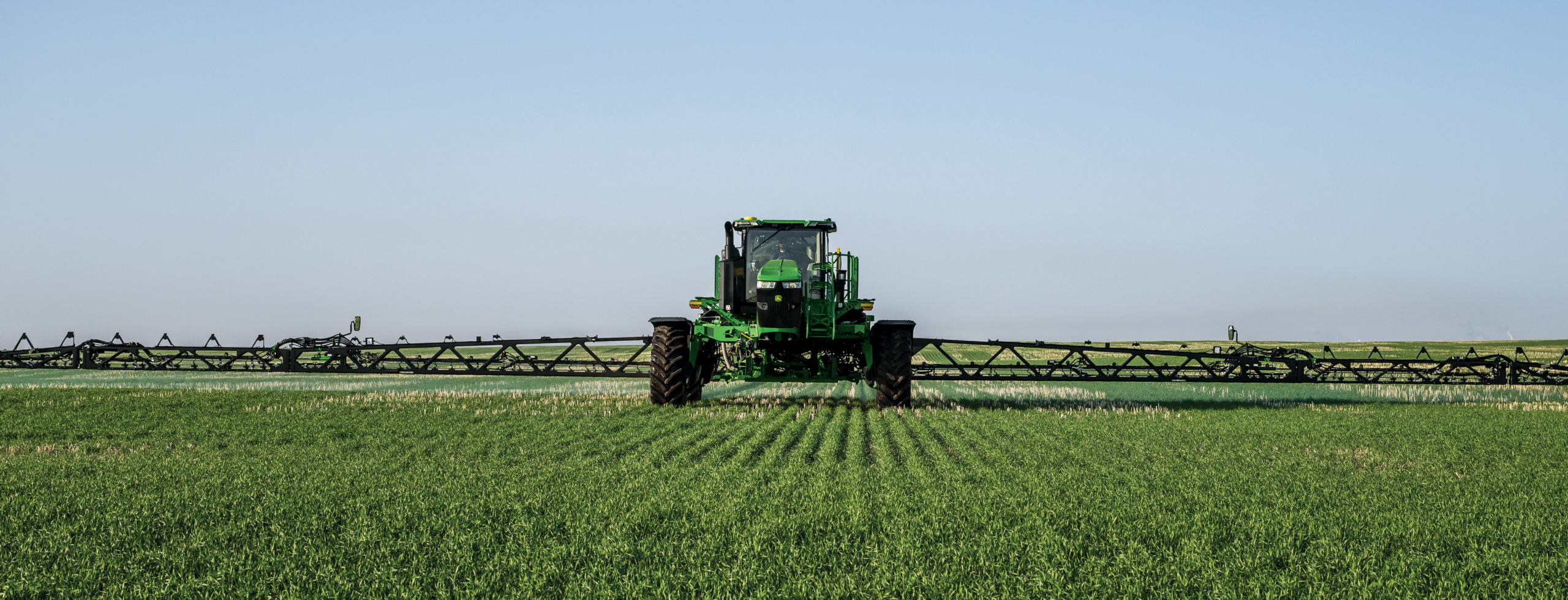
See & Spray Gen 2 uses cameras and machine learning to distinguish weeds from supported crops. As the sprayer crosses the field, it processes images and activates individual nozzles where weeds are detected.
For a targeted herbicide application, this means treating detected weeds while avoiding unnecessary application across areas without them.
The practical question is straightforward: if weeds are scattered across a field, does every square foot need the same post-emergence treatment?
Targeted spraying gives producers another way to approach that decision.
Advantages of Targeted Spraying
- Potential to reduce herbicide use where weed coverage is limited
- More precise placement of targeted applications
- Flexibility to build spraying programs around field conditions
- Opportunities to make better use of crop protection inputs
What Has Changed with Gen 2?
One of the biggest changes is broader crop compatibility.
Alongside corn, soybeans, and cotton, Deere’s current Gen 2 information lists wheat, barley, canola, sorghum, sugar beets, peanuts, and edible beans. Targeted applications in wheat and barley are specified for broadleaf weeds only.
For Ontario producers, compatibility with corn, soybeans, and wheat makes the conversation especially relevant. The right fit still depends on your crops and intended applications, so confirming supported uses should be part of your equipment discussion.
Targeted Spraying vs. Broadcast Spraying: Which Is Better?
The answer depends on what you need the application to accomplish.
Targeted spraying makes sense when the objective is treating detected weeds. Broadcast spraying remains useful when the product needs coverage across the field, such as a residual herbicide application.
A lower sprayed percentage does not automatically mean a better weed-control program. The goal is choosing the application method that suits the product, field, and timing.
For many operations, the most useful approach is combining both methods.
Single-Tank vs. Dual-Tank: What Is the Difference?
See & Spray Gen 2 offers single- and optional dual-product configurations.
The dual-tank system can broadcast one solution while targeting weeds with another during the same pass. For example, an operator can broadcast a residual herbicide while applying a separate non-residual herbicide to detected weeds.
That gives producers more flexibility in how they organize an application.
Advantages of a Dual-Tank Configuration
- Separate chemical solutions
- Independent application rates
- Targeted and broadcast spraying in one pass
- Potential to combine work that would otherwise require separate passes
The best configuration depends on how often your spraying program would use those capabilities.
How Technology Has Changed Spraying
Today’s sprayers can help operators make decisions about where to apply product, how much to apply, and what information to collect along the way.
Variable Rate Based on Living Biomass
Gen 2 adds the ability to measure living biomass and vary application rates using thresholds set by the operator.
This provides another way to respond to differences across a field. It is a separate capability from detecting weeds and switching targeted spray nozzles on or off.
ExactApply™ and Individual Nozzle Control
Compatible nozzle-control systems help turn application decisions into accurate delivery.
On the 412R, ExactApply supports individual nozzle shutoff, turn compensation, and pressure management as operating speed changes. These functions help control overlap and maintain application consistency.
See & Spray identifies where treatment is needed; nozzle control manages how the product is delivered.
Optional Full Boom Lighting
Optional full boom lighting enables nighttime targeted spraying in fallow fields.
For operations working around tight application windows, that can provide more scheduling flexibility.
See & Scout™ Field Insights
Deere says See & Scout field insights will come standard on Gen 2 sprayers starting in 2027. These include weed-pressure information and stand counts, initially in corn, with data available through John Deere Operations Center™.
That creates opportunities to review what the sprayer observed and use those observations in future field-management decisions.
How Much Herbicide Can See & Spray Save?
There is no single savings percentage that should be applied to every farm.
A field with scattered weeds presents a different opportunity than one with heavy weed coverage. Your assessment should consider the area requiring treatment, product costs, number of suitable applications, and technology costs.
It also helps to distinguish savings on the targeted product from savings across the entire spraying program. A broadcast product applied during the same pass still contributes to your total chemical use.
For a useful equipment comparison, start with your own acres and applications rather than a headline percentage.
Understanding the Software Requirements
Deere specifies that Gen 2 single-product hardware is standard on 2027 and newer 400R and 600R sprayers, with an optional factory deduct. In-crop targeted applications require a renewable software licence; targeted fallow applications carry no additional technology charge.
Is See & Spray Gen 2 Right for Your Farm?
Start by asking:
- Which crops and applications would use targeted spraying?
- How much of each field typically requires post-emergence treatment?
- Would separate targeted and broadcast solutions improve your program?
- What are the equipment and recurring software costs?
- What training and support would your operators need?
Those answers will help you judge the technology against the way your farm actually operates.
Explore See & Spray Gen 2 at Podolinsky Equipment
Our new John Deere 412R with See & Spray Gen 2 brings this technology to Podolinsky Equipment.
The 412R platform offers a nominal 1,200-US-gallon tank capacity, approximately 4,542 litres, and boom options up to 132 feet. Its available spraying technology gives producers plenty to consider beyond the machine’s size.
Our Agriculture Sales and Precision Ag teams can help you explore how Gen 2 fits your crop rotation, application program, and equipment plans.
Contact Podolinsky Equipment to learn more about our new 412R and discuss See & Spray Gen 2 for your operation.
Website Setup
Suggested URL slug: john-deere-see-and-spray-gen-2
Meta description: Explore John Deere See & Spray Gen 2, targeted spraying, dual-tank options, and the new 412R at Podolinsky Equipment in Southwestern Ontario.
Research Sources and Editorial Notes
Research checked September 30, 2026. Sources are current Deere product information and Deere’s May 11, 2026 update.
- John Deere Canada: See & Spray Gen 2
- John Deere Canada: Sprayers & Applicators
- John Deere Canada: 412R Sprayer
- John Deere MachineFinder: May 11, 2026 technology update
The reference mower post guided the structure: introductory context, plain explanations, benefits lists, technology subsections, buying considerations, and a dealership call to action.
The arrival of Podolinsky’s 412R is based on information you provided. Machine specifications describe available platform options, not a verified build sheet for your particular unit. The draft avoids unverified claims about being among the first in Ontario and does not promise a savings percentage or yield increase.